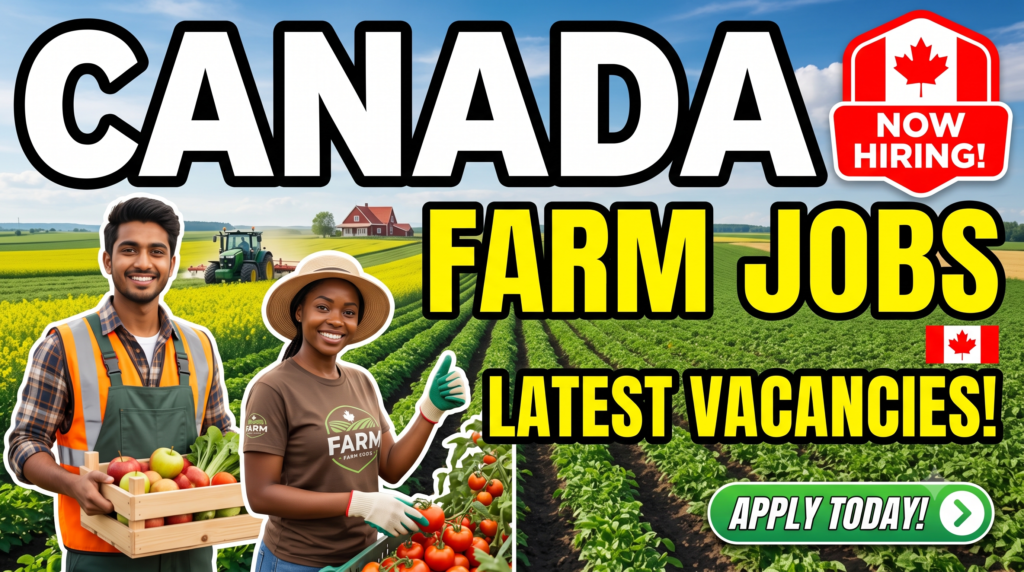
Canada’s agriculture industry continues to offer excellent employment opportunities for both local and international workers. In 2026, farms across the country are hiring general farm workers, fruit pickers, dairy farm workers, livestock labourers, greenhouse workers, and equipment operators. According to the Government of Canada’s Job Bank, there are more than 1,800 farm worker job postings available nationwide, with strong demand in provinces such as Ontario, British Columbia, Alberta, Saskatchewan, Manitoba, and Prince Edward Island.
If you’re looking for farming jobs in Canada in 2026, this guide explains the available positions, salary expectations, eligibility requirements, visa options, and how to apply successfully.
Why Work on a Canadian Farm?
Agriculture is one of Canada’s most important industries, producing crops, dairy products, livestock, fruits, vegetables, and grains for domestic and international markets. Farms regularly hire seasonal and permanent workers, making farming an attractive career choice for people seeking stable employment.
Some benefits include:
- Competitive hourly wages
- Full-time and seasonal job opportunities
- Overtime pay during busy seasons
- On-the-job training
- Accommodation offered by some employers
- Health and safety protections
- Career advancement opportunities
- Potential hiring of eligible foreign workers through approved programs
Popular Farming Jobs in Canada
1. General Farm Worker
General farm workers perform a variety of daily agricultural tasks, including:
- Planting crops
- Harvesting fruits and vegetables
- Feeding livestock
- Cleaning barns
- Operating basic farm equipment
- Packing produce
This is one of the most common entry-level farming jobs.
2. Fruit Picker
Fruit pickers work during harvest seasons collecting crops such as:
- Apples
- Blueberries
- Strawberries
- Cherries
- Peaches
- Grapes
The work requires physical stamina and attention to quality.
3. Dairy Farm Worker
Dairy workers assist with:
- Milking cows
- Feeding livestock
- Cleaning equipment
- Maintaining barns
- Monitoring animal health
Dairy farms often operate year-round.
4. Greenhouse Worker
Greenhouse employees help grow vegetables, flowers, and plants in controlled environments.
Responsibilities include:
- Plant care
- Watering
- Harvesting
- Packaging
- Pest monitoring
5. Livestock Farm Worker
Livestock workers care for animals such as:
- Cattle
- Sheep
- Goats
- Poultry
- Pigs
Daily duties include feeding, cleaning, monitoring health, and maintaining facilities.
Average Salary for Farming Jobs in Canada 2026
Pay depends on the province, employer, experience, and type of farm.
Typical hourly wages include:
- General Farm Worker: CAD $16–21/hour
- Fruit Picker: CAD $17–20/hour
- Dairy Farm Worker: CAD $17–22/hour
- Greenhouse Worker: CAD $18–22/hour
- Livestock Worker: CAD $18–23/hour
- Farm Equipment Operator: CAD $22–35/hour
Current Job Bank postings include farm worker wages ranging from approximately CAD $16.35 to $20.18 per hour, while specialized roles may pay more.
Provinces with High Demand
Agricultural jobs are available throughout Canada, particularly in:
- Ontario
- British Columbia
- Alberta
- Saskatchewan
- Manitoba
- Prince Edward Island
- New Brunswick
- Quebec
Popular farming regions include:
- Abbotsford
- Surrey
- Osoyoos
- Campbellford
- Delta
- Sharon
- Montague
- Norwood
Requirements for Farm Jobs
Many entry-level positions require little or no previous experience.
Common employer requirements include:
- Minimum age according to provincial employment laws
- Ability to perform physically demanding work
- Willingness to work outdoors
- Ability to lift heavy loads
- Teamwork skills
- Basic communication skills
- Reliability and punctuality
Some equipment operator or supervisor positions require previous agricultural experience or specialized training.
Typical Work Schedule
Farm work often involves:
- Early morning shifts
- Weekend work
- Seasonal overtime
- 35–60 working hours per week depending on harvest periods
- Outdoor work in varying weather conditions
Skills Employers Value
Successful candidates usually demonstrate:
- Physical fitness
- Strong work ethic
- Reliability
- Attention to detail
- Ability to work independently
- Teamwork
- Time management
- Basic machinery knowledge
- Animal care experience (for livestock positions)
Opportunities for Foreign Workers
Canada also hires eligible foreign workers in agriculture through approved immigration and temporary worker programs when employers cannot find enough local workers. Employers must meet specific government requirements before hiring internationally, and not every farm offers visa sponsorship or LMIA support.
Before applying, applicants should:
- Check whether international applications are accepted.
- Confirm whether work authorization or employer sponsorship is required.
- Prepare a Canadian-style resume.
- Meet the eligibility requirements listed in the job advertisement.
Documents Required
Most employers request:
- Updated resume
- Passport (for international applicants)
- Educational certificates (if applicable)
- Previous work references
- Work permit or eligibility documents, if required
How to Apply for Farming Jobs
Follow these steps to improve your chances:
- Search for current farming vacancies on trusted job websites.
- Read the job description carefully.
- Prepare a professional Canadian-style resume.
- Write a tailored cover letter.
- Submit your application online.
- Attend interviews if shortlisted.
The Government of Canada’s Job Bank regularly lists farm worker, livestock, harvesting, and greenhouse vacancies across the country.
Tips to Increase Your Chances
To stand out from other applicants:
- Apply early during hiring seasons.
- Highlight any farming or outdoor work experience.
- Mention experience with machinery or livestock if applicable.
- Show flexibility for long hours and seasonal work.
- Keep your resume updated.
- Apply to multiple employers.
Career Growth
Starting as a farm worker can lead to higher-paying positions such as:
- Farm Supervisor
- Greenhouse Supervisor
- Livestock Manager
- Equipment Operator
- Irrigation Technician
- Farm Manager
- Agricultural Business Owner
With experience and additional training, workers can build long-term careers in Canada’s agriculture sector.
Final Thoughts
Canada’s farming industry continues to create strong employment opportunities in 2026 for both experienced agricultural workers and beginners. With thousands of active farm-related job postings, competitive wages, and opportunities across multiple provinces, agriculture remains one of Canada’s most accessible industries for job seekers.
Whether you’re interested in fruit harvesting, dairy farming, greenhouse production, or general farm work, preparing a strong resume and applying through trusted sources such as the Government of Canada’s Job Bank can significantly improve your chances of finding employment.